Be yourself; Everyone else is already taken.
— Oscar Wilde.
This is the first post on my new blog. I’m just getting this new blog going, so stay tuned for more. Subscribe below to get notified when I post new updates.
Be yourself; Everyone else is already taken.
— Oscar Wilde.
This is the first post on my new blog. I’m just getting this new blog going, so stay tuned for more. Subscribe below to get notified when I post new updates.
I’ve been struggling with what to discuss for my final blog post. I seem to have ran out of ideas and I cannot think of anything specific to discuss so I’m going to discuss one of my favorite forms of entertainment: Vines!
I’ve been a huge fan of Vines for the past year and a half now. I kind of got on the Vine train after the original app was already killed off (RIP to Vine, we will always remember), but Youtube compilations have allowed me to grow and nurture my Vine obsession so I’m grateful for that. I want to discuss Vines particularly now because everyone is on the TikTok hype and I want people to know, understand, and appreciate that Vine paved the way. TikTok is sitting on the shoulders of Vine and it needs to appreciate that!
Anyway, I’ve been (re)watching a lot of class Vine compilations again to pass time in quarantine and I want to discuss some of my favorite Vines, what makes Vine so great, and some of the ways I think it’s superior to TikTok. (And yes, obviously I’m biased, but who cares, this is my blog post.)
So let’s start with some of my favorite Vines!
This vine is pure perfection. It has word play in it, so it’s cute. It has a vegetable in it, so you know it’s healthy. And it’s just straight up wholesome and adorable. One of my favorite Vines of all time.
This Vine, at first viewing, may seem like a simple and beautiful Vine of Kenneth “fuck[ing] it up” as the narrator and filmer states. But if you look at it more closely, your realize these series of Vines tell a journey. A journey of Kenneth’s progression through high school, where at each point he stays true to himself and keeps “fuck[ing] it up.” We start with Kenneth getting ready to go to school, by looking in the surroundings we can extrapolate that it is Fall and it is perhaps him starting his senior year of high school. The next clip is of him going to Prom. This supports the hypothesis that this is his senior year, and we can see him looking fly af as he goes to Prom. The next clip is of him attending camp, and again he is still confident of himself and his identity and presenting as a happy young black boy getting ready to see what his next journey is in life. The final clip I think can be assumed that it is of Kenneth getting ready to go to college. You can hear the narrators voice cracking as he says good by to Kenneth but he is proud of the man Kenneth has become and is proud to see what he can accomplish in the future.
Now, I may be reading into the Vines. But regardless of this journey existing, this Vine is pretty fun to watch, and it may carry more depth than what might be initially perceived.
This Vine just has such a beautiful twist to it. It sets up an expectation and shatters it. It’s simple yet elegantly beautiful.
This Vine is a great example of an educational Vine. This Viner is able to teach us about chickens. How they roam, how they flock, how they exist. Yes, she may be wrong, but are able to join her, as she explores and learns of the world, and what more could you want than that?
This constant desire to sleep I feel is very relatable in our quarantine time. The wise words of “it be like that sometimes” sums up this sentiment well.
This addresses a very valid concern most of us have when driving.
I would like to end on this Vine because I am also confused about most American pronunciations as well. The Vine does a great job pointing out a clear discrepancy in how we pronounce things, and we need to address it.
Now that you’ve watched some of the classic, need-to-know Vines, we can discuss the beauty of Vine. Vine is amazing because it really made content creators have to be creative to stand out and to meet the 7 second restriction. It made Viners have to really find something profound, novel, or presently odd to present, and boil it down to the 7 second essences of the topic.
Another plus of the 7 second restriction is that it made bad Vines bearable as well. If you read through a disappointing 300 page book or a 2 hour movie, you’re probably going to be angry to have wasted your time on that (and rightfully so to some degree), but if you watch a bad 7 second Vine, that shouldn’t really piss you off because it’s only 7 seconds. Vines for that reason have great payoff and very little risk, which make them a great source of entertainment.
The fact that TikToks do not have this kind of restriction is my main disappointment in videos. The lack of this restriction I think to some degree makes some of the content not as fun as Vine (although there are still some SOLID TikTokers as well*). It also makes the disappointing TikToks even more disappointing because I waste a lot of time trying to watch them to the end only to get no pay off. But the one thing I think TikToks do well is the trends where multiple people produce TikToks following the general trend but with the TikToker’s own twist on it**.
I know this blog post was super extra. Thank you for reading through to the end. Hope you got some great Vines from it!

When a movie, show or game is a big hit, people (especially hard-core fans) usually really want a sequel. Even if the original media product was intended to be a one time thing and everything has been concluded, fans will often ask for at least a spin-off or some other means of enjoy the world and fantasy created in that media. But this begs the question, what should come next? How should a story or game be continued? Should it just be the same thing with just a new skin applied to it? Should it be drastically different and take fans through a whole new experience? I’m sure these are questions the creative team of product go through when designing a sequel, and although there does not seem to be a clear formula for creating a sequel, there seem to be general practices people can follow that will help.

I have been recently playing the sequel to Ori and The Blind Forest, Ori and the Will of the Wisps (no spoilers! I’m not far yet) and I’ve been very impressed with how similar yet different the sequel is. A core and strong element of the first Ori game I would say would be story. Ori and the Blind Forest had a very solid story involving friendship, family, survival, loss, tragedy, and perseverance. I was legit bawling when I was first playing the game and as the premise of the story was established. This strong and beautiful story really made the game stand-out to me, and the sequel follows through (from what I’ve seen so far) by continuing this story and not really disappointing in that aspect. Yes, the story is pretty different from the first one, but it does a good job picking up where it left off and maintains the strong themes that existed in the first one. It’s also different enough that it is still engaging and explains the aspects of the Ori and the Will of the Wisps that differ from the first. Like in the sequel, there are far more NPCs and a more apparent in-game economy and this difference keeps the sequel engaging because it’s not the same-old stuff, but the story still links all of this well-enough that these changes don’t seem jarring or out-of-place. So keeping a strong story core and diversifying gameplay and interactions seemed to work well for this sequel.
Also, slightly side note, the sequel does a great job continuing to produce stunning aesthetics like the first one. And rightfully so because the beautiful and elegant story and gameplay of Ori deserves to be coupled with graphics and soundtracks that match.
I think Mulan 2 fails to do well in this criteria. Like, personally, I still enjoyed the movie because I am a huge Mulan fan and you could have literally given me 90 minutes of Mulan just talking and I would have loved it. But I definitely understood people’s disappointment in the movie, stating that it lost it’s core theme of family honor, identity and bravery. The sequel felt like it had far less substance to it compared to the first because although it kind had similar themes as the first, I don’t think the way it executed them was as compelling as the first one.

If you’re a hard-core fan, you might be satisfied with the same exact content essentially because your concern will probably be with trying to stay in the fantasy and world a little long. But, for most people, the same thing is not going to cut it, so when you do a sequel, you’re going to have to introduce novelty while not corrupting the core essence that defined and made it great to begin with.
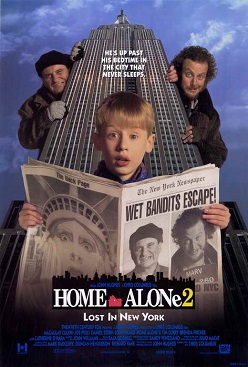
A movie series that I feel did not do well with this was Home Alone. The first movie was amazing and hilarious; the concept of being a parent-free (control-free) child is amazing for children and it was told in a very comedic way. The sequel however I felt was just okay. I’ve already experienced the fantasy of being in-charge as kid, so the sequel did not feel like it provided me with any additional depth. It did not do what the original one did better nor did it provide me with any thing really new so it fell a little flat (although it was still fun to watch, but I wouldn’t call it great or recommend both the first and the second one).
I think children TV shows/challenge do a good job of creating spin-offs to keep the world they have created keep going. Now, personally, I think they usually make spin-offs because those working on the original series want to move on, but regardless, channels like Nickelodeon or Disney I felt did well in figuring out what fans liked the best of the original and using it to create a spin off. This is sometimes the better option than trying to produce a sequel because if a story is cleanly concluded, it does not always make sense to make a sequel. And worst yet, it sucks when creators muddle the story and string along fans in an attempt to make vie for a sequel. A continuation of a media product does not need to always be a sequel so please don’t destroy something by dragging it along and instead make a spin-off focusing on the parts of the story or world you think deserves more attention.
These are my general tips/takeaways I’ve developed from all the media I’ve consumed. And I cannot stress enough the last one because a manga I’ve been reading for like 4+ years now has been stringing me along (not with hopes of sequel but with hopes of extending the story over a longer time I think?) and it’s been driving me crazy! If you have a strong core, don’t mess with. But if you think there is a way to keep the core and still do something new and interesting building off the original content, go for it! You know the fans will love to continue experiencing the world you’ve created.
I really enjoy playing puzzle games. I find good puzzle games very engaging. It’s so thrilling when you solve the puzzle, and because you have to flex your mental muscles to progress, it feels like the hours spent playing the game kind of feel like they (possibly/hopefully) improved your mental capabilities. (Or at least that’s what I tell myself about my 16+ hours spent playing Sudoku over these past 2 weeks).
However, a bad puzzle game can be super frustrating and feel like a waste of time. And if the puzzle is only a component of a bigger game, it can drag the entire game down with it if it is done really badly. But what makes a puzzle or puzzle game good or bad? We discussed puzzles in class to some degree so I’m basing this post on a mix of what we discussed and what I’ve learned from some of the puzzle games I’ve played.

The first game I will discuss in Sudoku. I LOVE Sudoku. I used to play it as child and I’ve recently picked it up again and wow it’s just such a fun game. I think Sudoku does a good job at being clear about the objective of the game is. It’s always the same; you need to fill very vertical and horizontal line as well as the smaller boxes with the numbers 1-9 with no repeats. The goal is very clear and straightforward to understand so player are never confused about “what to do” and instead spend their time contemplating “how to do it”. And the “how to do it” is a very worthy challenge. Depending on how hard the game, you can spend a long time finding the unique arrangement of numbers to solve the board. The replayablity factor of the game is also very easily achieved because as soon as you’ve created a new board, you’ve created a new game with the same rules but different challenges. These three qualities of Sudoku I feel make it a very fun game that one can pour hours into because each game is fresh and engaging with new challenges.

Shifting gears to a bad puzzle game, let’s discuss the puzzle game “Here.” The challenge of the game is to find the words “here” in each level, and each level has some crazy twist where things may be spelled in morse code or you have to shake the phone to reveal the “here.” When I was first playing this game, I did enjoy it. It was novel because it required usage of phone input the games don’t usually require (like shaking the phone) but once the novelty wore off, I kind of realized the game was not super fun to play. I thought the challenge of find the “here” was fun but each level was just completely new and weird that it was hard to figure out what I was supposed to do.
I would argue that the clarity and guidance of the game was lacking because even though I knew I was looking for here, not all levels gave a reasonable amounts of information as to how to find it. Like it sometimes felt like the connection between the solution and puzzle were not really there and the level did not seem to present enough information for you to conclude the solution. Trying to solve a puzzle when you don’t have all the start information you should have had is not fun.

A game on the contrary that I really liked that I felt did have good clarity and guidance is “Baba Is You.” “Baba Is You” is a puzzle game where you try to maneuver Baba towards a golden key, but there will be different obstacles blocking you and you must over come them by manipulating words in the scene to create the desired changes. When you form sentences using the words in the scene, those sentences become true and change the scene (e.g. if you combine the words “Baba Is Key,” Baba will turn into a key). This game did a really good job of gradually increasing the challenges of the game and teaching game mechanics well before flipping them on their head. As with the game “Here,” in “Baba Is You,” each level would have a new challenge with the same goal of “winning” by reaching the key. But in “Baba Is You” each level kind of builds on the previous ones because it’s always a matter of manipulating the words available to you to achieve the goal. And since words are slowly added, the challenge increase follows the players (hopeful) skillset increase. This is what I think was lacking with the game “Here.” Each level was unconnected so I did not feel like I was getting better although the challenges were getting harder.
“Baba Is You” also has great shifts of perspective. The players must learn to use old game components in a new way. Players must learn to challenge their previously established idea of a game component and think outside of the box to find a new (and still reasonable way according to the base game rules) to use it. This requires a good shift of perspective that makes each level pretty fun to play. The shift of perspective keeps the player engaged because not everything is essentially what it seems to be and players are constantly challenged to find a new way to do something.
I think there are a lot of things that can make or break a puzzle game. Some big factors are clarity, replayablity, challenge, guidance, and good shifts of perspective. And I don’t think a puzzle has to have all of these component to be a good puzzle, but I do feel like these components do really help.
In Game Design class, we discussed how using the “voice” properly is very important when telling a story, and if done wrong, it can really detract from then entire story experience. Having great voice actors who really vibe well and work well off each other can help convey the story being told in a more natural and convincing way, and on the opposite end, even if the story is amazing, if the voice(s) used to tell the story are not good, it’s not going to be as enjoyable.
While discussing voice, we also got on the topic of the use of inner voice in different forms of entertainment, and it seems to be a medium not often well used and explored. I personally have only good things to say about it because even though I have only seen it used is a select number of places, the uses I have seen have been pretty dope. But in class, one specifically bad use was mentioned, the movie Dune(1984), and after seeing clips from the movie I definitely agree.
For those like me who have not seen the movie, I’ve linked one of the trailer for the movie here above. I’d recommend watching it to kind of get a feel for what the movie is promising to be (and definitely not what it seems to actually be).
Here is a another link above to a YouTube video compilation of the “inner voice voice-overs” from the movie. Just watch a couple minutes/scenes to get a feel for it before jumping into my views/discussion.
So, I will preface all of this with I have not seen the movie so take what I say with a grain of salt. But after seeing this compilation, I can definitely see and agree that they did not use inner voice effectively in this movie (and it makes me not want to even attempt to watch the full movie).
First of all, with the trailer, it makes the movie seem like it’s action-packed but watching the voice-over clips, it does not seem to live up to that expectation. Like those two clips did not seem like they came from the same movie. One seemed very active and fast-paced (kind of Star-Wars-y in my opinion) and the other seemed more like a thinking, slow-paced movie. I think this mismatch of expectations is one of the reasons voice overs were not effective in this movie. It was not done in a way that fit the feel the movie seemed to be trying to achieve.
Another reason I think the voice-overs were a bad move is the actual audio itself. This might be because of the compilation I found, but honestly, they sounded pretty creepy and weird. Rather than an inner voice, they sounded like an evil, villainous voice. You know, like the ones you hear in horror movies and you’re not supposed to follow. Making the voice-overs whispers and airy I think was a very bad move because at the very least, if they had been normal speaking pace/sound, I think they would have sounded less creepy and given everything a more active feel rather than a passive one.
The last thing I would like to critique is the visual clips shown along with the voice over. I saw a lot of zoom-in on faces and facial expressions and I think that was bad because it was pretty boring to watch honestly. Like I already am hearing their voice, so what additional information will their facial expression provide me? I think showing the speakers face/expressions can be helpful if it’s done in moderation but it would be far more interesting to find something else in the story to show that would add to the viewers newly gained knowledge.
So, at this point, I’ve kind of trashed on Dune a lot and I feel kind of bad (remember I did not watch the entire thing so maybe it was actually a gem and I’m just too simple to see it), so let us instead discuss cases where I think inner voice voice-over is done well.

One example that immediately comes to mind is You (a great Netflix show with 2 seasons out if you want to binge). You follows this psychotic character Joe who is a hopeless romantic that falls for women, obsesses over them, stalks them, until he can get with them (or in his words, until he can finally show them that they are meant for each other). The show is filled with Joe’s inner voice voice-over where he explains (or deludes) how him and the girl are meant for each other and how he’s going to get with her to achieve happily ever after. I’ve linked one such clip below:
So in this clip (and the rest of the show) I think voice over was done super well and I felt like it really helped the viewers literally get in the headspace of Joe, so we could kind of understand his bizarre thought-process. Without the voice over, (I hope) viewers would not be able to understand his obsession and feelings he develops, so the voice over really helps keep us all on the same page. Also note, the voice-over is done is a normal human speaking pace and not a weird whisper-y creepy thing which feel so much better. Like the inner voice in our own head is not a weird whisper (I think? Or is my inner voice weird?) so when it is portrayed in a show it should not be like that either.
Another thing I think You does well is it keeps the inner voice almost exclusively to Joe. Now I don’t think that is always necessary but I do feel like it make the whole thing feel better because I can normally hear only one inner voice (namely my own) so it would make sense I would always hear the same inner voice in a show as well. I’m sure it can be done well where you can hear multiple ones, but I think a safe bet is also just to keep it to one.
A third thing to consider is to use inner voice voice-overs when the character is more cryptic/complicated/interesting. If I can understand/guess a character’s thoughts and motives from their actions, I don’t necessarily need the voice over so why provide it. On the other hand, if the character is hella crazy like Joe and I (hopefully) cannot follow, then an inner voice narration can be really helpful so I can better sympathize/relate-ish(? – strong maybe not correct word) with the character.
These are the reasons I think You works so well. The voice-overs add to the experience and they are augmented with clips that show interesting actions that go along with the voice over (something I think Dune failed to do). Another piece of entertainment that does well with voice-over is the puzzle game Hue.
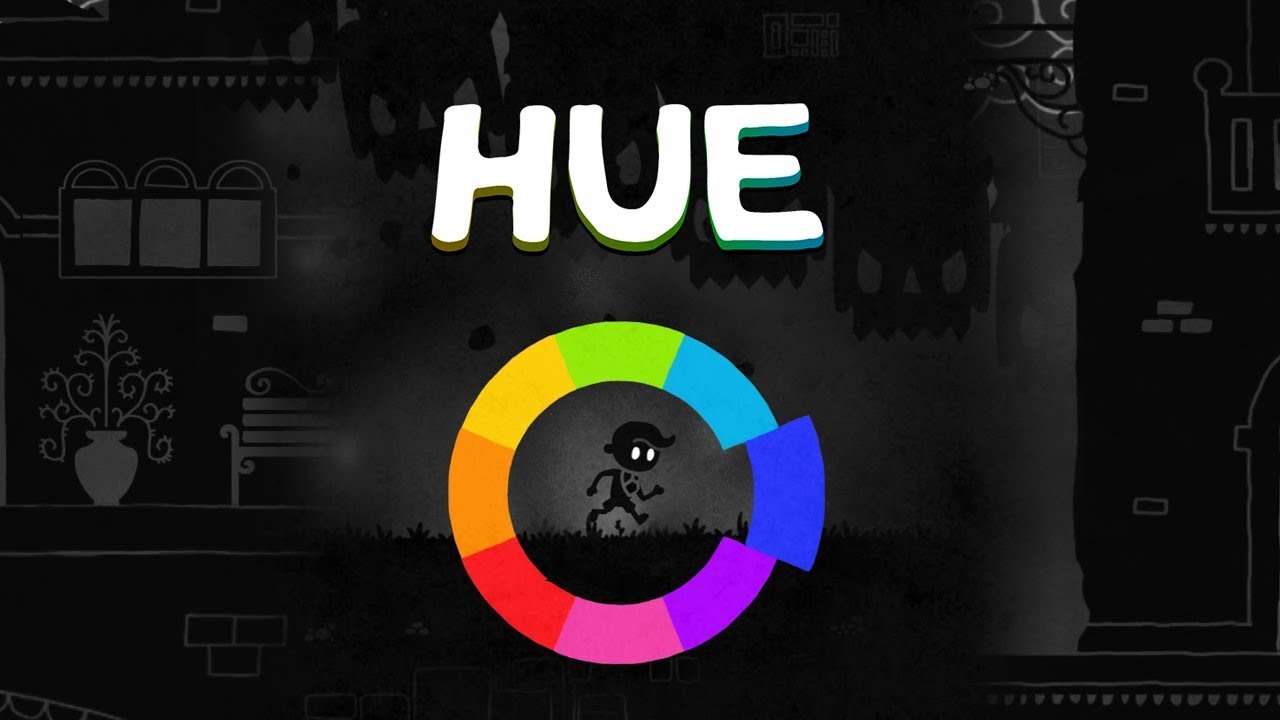
I think it would not be 100% accurate to use the term “inner voice voice-over” with Hue because the voice overs are more narrations of letters that express a characters (the Mother’s) inner thoughts. But I feel like it’s kind of in the same ball park so I am going to discuss it a little.
Hue conveys most of its story through these letters, and when you discover a new color (you have to unlock colors before you can use them) it is accompanied with a voice over narration. And I really loved that the game did this because I wanted to know the story but I felt like an animated cut scene would be awkward and I definitely would not want to read text to learn the story, so I felt like the voice-over was prefect. Also, because it was a voice-over, I could keep playing and exploring the world while learning more about the Mother’s motivations and reasoning that lead to the circumstance resulting in this game. (And I will 100% admit for myself, it also helped that I loved the narrator’s voice and accent as well).
I feel like Hue is another example of voice-overs done well, and I hope games/shows/movies will incorporate them more in the future. They can really help aid in conveying a story if done well, and they bring new insight into characters in ways not possible through only viewing their actions. However, they are definitely double-edged swords so you have to be careful and use them well and wisely because other wise you may end up with a whisper-y mess.
Summary of Takeaways with Inner Voice
When thinking about video games, there is always the never ending question of what is the best medium to express the experience. Should it be a PC game? A flash game? A VR game? A console game (and if so which console)? Because the medium used can limit or enhance the experience, so it is essential to medium that is appropriate for the game. And in the same vain, there is the question of how should the game be played? Every now and then, I see games trying to have a more physical approach to their game play (think Wii/Wii Sports), but is that something game should strive to do?
Before video games, a lot of games people/kids played would be physical games. Many people grew up playing hopscotch, double dutch, a variety of sports (soccer, basketball, etc), and the list goes on. These were popular because usually easy to do with little resources and technology, and playing these with other kids allowed children to learn to socialize and exist in a society. The physical aspects of these games also helped keep kids fit and healthy. However, now days, with the abundance of technology, many kids are choosing to stay at home staring at a screen (playing games) rather than going outside and playing with others. And a lot of times the media they consume get blamed for making kids behave like this.
It is all too common here parents complaining about video games, saying that they are making their kids unhealthy because they are teaching kids to be couch potatoes addicted to their entertainment devices. However, some video games/consoles such as the Wii seem to have addressed these complaints (at least the physicality complaint).

The Wii Console was the first console my parent allowed us (me and my siblings) to buy (we still had to earn the money for it, but at least we had parental approval to bring it into the house). I remember distinctly the reason my parents were okay with this console was because they heard it still required movement to operate, and therefore they thought it would be a healthy alternative to other video game options. And they were satisfied with how much we were moving to play Wii Sports, at least at first.
In the beginning few months of getting the console, we were really existed about the “physicality” of the Wii Sport games. We thought it was an innovative take on gaming and we really enjoyed feeling like we were learning and improving at a sport. However, as we played the game more, we realized 1) we could cheat the system (like for bowling, an almost always guaranteed way to get a strike would be to just flick you wrist upward when throwing the ball) and 2) sometimes cheating was better than actually trying. The second point was especially what disheartened me. I was very frustrated that my brother was able to cheat and do better than me when I was actually trying to the physical aspect of the game correctly.
This was my first encounter with physical gaming (I call it this, but there is probably a better and more proper term), and it was pretty mixed. I really did like the idea of physically moving to enact change in the game. But I was also disappointed that the technology was not at the level to allow this accurately. But this experience also got me thinking, should games be aiming to do this? Like kids still do play outside and play physical games, although the popularity of video games have probably offset that to some degree, so should physical video games be created to counter act this offset? Is this something the gaming industry should feel responsible for?
The Wii made me feel like gaming industry might feel so me responsibility. I remember in the loading screen, of the Wii Sport I think, there would be messages like “be sure to take a break and go outside / don’t forget to go outside and exercise.” Considering the Wii is already a physical game, I always found it odd that it wanted me to go out and exercise more. (Also just from a profitability standpoint, shouldn’t you try to keep people playing your game? Not tell them to stop and do something else). So, I wonder if other game developers feel this same pressure to encourage physicality.
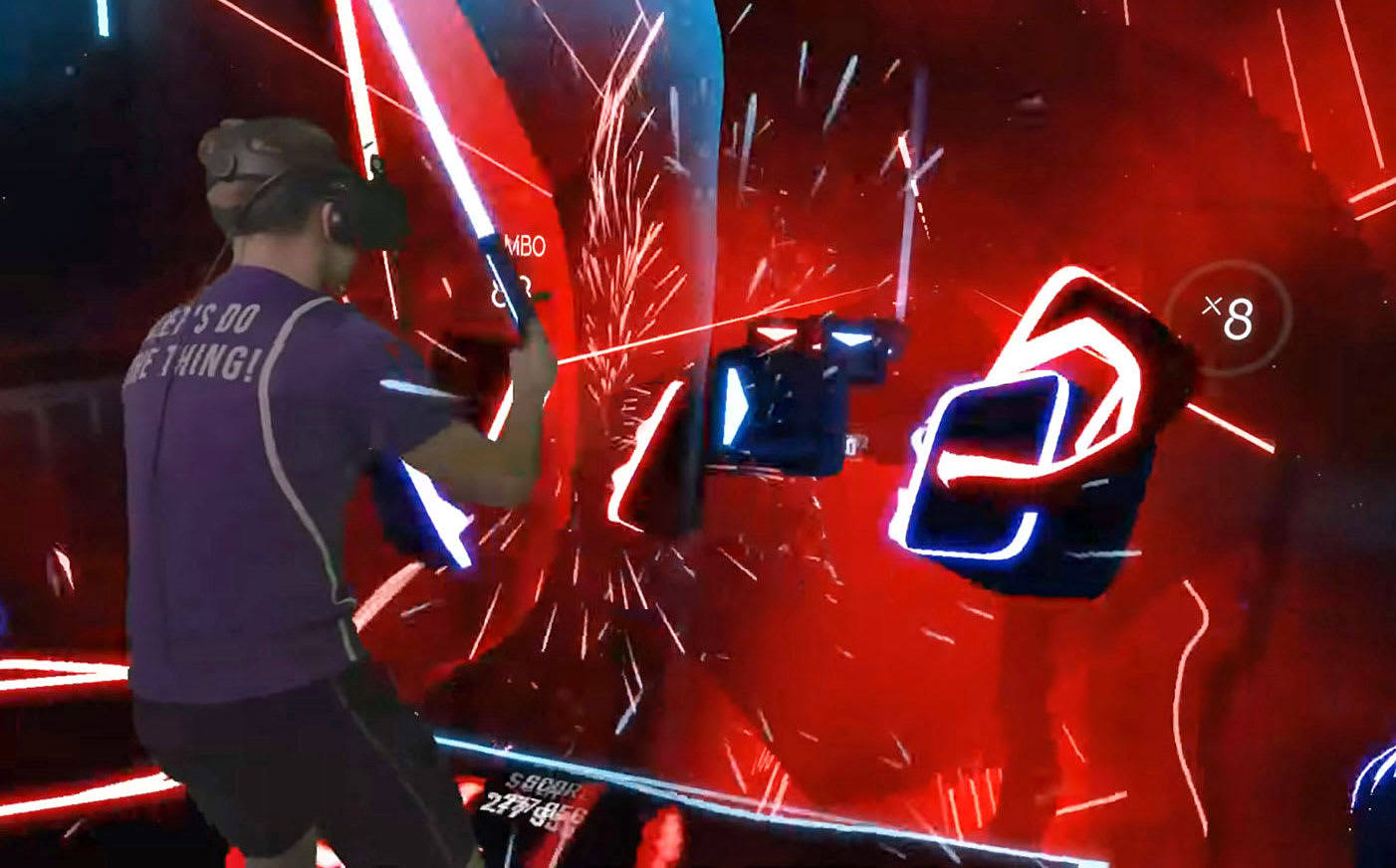
Feel like I see this tendency to physicality in VR/AR/immersive games, and in this medium I feel like it makes a lot of sense. With VR, one of the most popular games is Beat Saber (picture above) and that game is very physical (or may I’m just weak because I get exhausted from playing it). With immersive games, the physicality of games feels very natural and I would love to see more immersive experience really lean into the physical aspect and design a experience that physically feels good.
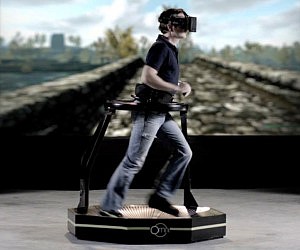
Many technologies designed to encourage movement in immersive technologies are coming out. One notable one (or more accurately, one I’m sure excited and intrigued by) is the VR Treadmill (pictured above). If the technology for it works well and it can be comfortably/naturally integrated into VR games, I think the VR Treadmill could be a game changer and I feel like it would be the most efficient way to add physicality to gaming. Also, this feels like the correct way to add physicality to gaming that doesn’t feel gimmicky as the Wii Sports sometimes felt because it did not feel comfortable.
Hope physicality is incorporated to immersive experiences because it feels very natural there. Like immersive experiences are already trying to achieve high levels of realism so it makes sense to mimic (or I guess enable) the in-game physicality with out-of-game physicality. However with other games, I am a little hesitant on physicality. I think it is cool but it can also fell kind of out of place, especially if a classic controller would allow for the same function in a more natural feeling way or the physicality system can be easily cheated. But this is not a complete discouragement of physical gaming in more traditional video games. It can probably be added in if a correct system is created for it, think the Switch Mario party games that require like shaking of the controller sometimes. And like Mario Party, you can add physicality were it fits and don’t when it doesn’t.

Also, and important thing to always consider when making a physical game (or in general making a game) is accessibility. You always want to add in alternative ways to accomplish the same task to allow for maximum accessibility for people with different disabilities. Yes, physicality done really well can be really cool, but you know what’s not cool? Having a whole subset of people who can’t enjoy your cool game.
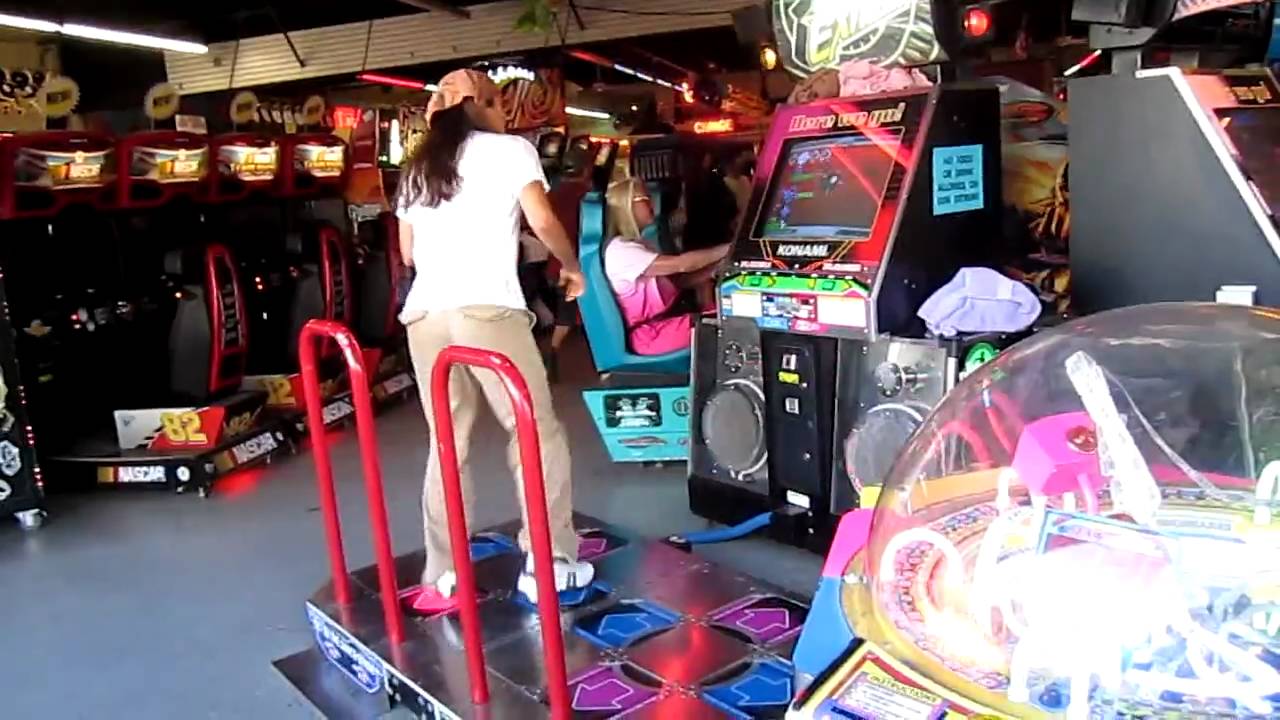
Also, totally slipped my mind earlier, Dance Dance Revolution is a GREAT example of physical game for (I would say) more traditional video games. It’s not really easy to cheat and the physicality goes well with what the game is about.
So for my first blog post, I am going to talk about how to have an effective story in a game. This is one of the things I really want to be able to learn (eventually) because I absolutely adore games that have a compelling and well integrated story element to them. And like the story does not need to be like overbearing to the entire game or even essential for you to understand/feel compelled by the game play. But like I want to be able to add effective story elements to the games I work on because when I play the game, if the story element of the game is good, that like multiplies the goodness of the game by like 10 fold and just makes it so much more entertaining for me. So I want to be able to do the same. Okay, that is my reasoning for doing this. But I will also state that I do not have this skill currently, so I will just talk about a couple of the games I have played (throughout my blog series) that I’ve really enjoyed the story element of (and hopefully I will be able to eventually draw out the commonalities, because I can’t really right now, so I can one day reproduce them in my own work).
I will talk about for this blog post is Untitled Goose Game (just because I recently played it and it is fresh on my mind). To me, that game just did such a great job with story. Like even how it get’s you accustomed to the game play was like a cute and intuitive way because it slowly teaches you to be a goose as it teaches you the different actions you can preform in the game. I would count this part as story because it is essentially for you to feel one with the goose (as I did by the end of their intro/tutorial) for the rest of the game and story to work. I felt like I really embodied the mischievous little goose so that just made the game play so much better because I really got into it (and felt so angry and wronged when the towns people were mean to little old innocent me T.T). The thing that really got me on board with this story was the end thought (SPOILERS!) where you have to steal the bell back to your hiding spot and when you drop it off, you discover that there is a whole pile of bells you’ve hoarded before.
This part of the game had me ROLLING with laughter for so long because it just made everything I just did even way funnier. Like my kleptomaniac little goose self has been tormenting these town people (and they hadn’t killed me yet so honestly props to them) for while now and it justifies why they have anti-goose signs and why the little boy was scared of me (Side Note: he was the best character to torment because he actually ran from me). Seeing all the bells just enhance the entire game experience because the story and narrative that was built so far just got augmented with the fact that I am a repeat and habitual offender which just skyrocketed the comedic effect. Like it felt like an already solid story to begin with because I got to experience tormenting the town and those hoarded bells just solidified and multiplied the effect. I also think it helped that I did not see it coming at all so it had a nice little cherry on top feel to it. The game was already great without it, but with it, it was just phenomenal and kind of made it go full circle to me.
Anyway, as you can see, I thought this game just absolutely killed it with their story/narrative crafting and they really helped me embody the mischievous little goose I never knew I always wanted to be. I will bullet point list the things I think they did right, so that the next blog post I make continuing this topic, I will be able to (hopefully) more easily draw connections.
Effective Story/Narrative Aspects of Untitled Goose Game:
Anyway, 10/10 would recommend this game.
(I will come and add to this if I figure out other things that I think makes it stand out)
This is an example post, originally published as part of Blogging University. Enroll in one of our ten programs, and start your blog right.
You’re going to publish a post today. Don’t worry about how your blog looks. Don’t worry if you haven’t given it a name yet, or you’re feeling overwhelmed. Just click the “New Post” button, and tell us why you’re here.
Why do this?
The post can be short or long, a personal intro to your life or a bloggy mission statement, a manifesto for the future or a simple outline of your the types of things you hope to publish.
To help you get started, here are a few questions:
You’re not locked into any of this; one of the wonderful things about blogs is how they constantly evolve as we learn, grow, and interact with one another — but it’s good to know where and why you started, and articulating your goals may just give you a few other post ideas.
Can’t think how to get started? Just write the first thing that pops into your head. Anne Lamott, author of a book on writing we love, says that you need to give yourself permission to write a “crappy first draft”. Anne makes a great point — just start writing, and worry about editing it later.
When you’re ready to publish, give your post three to five tags that describe your blog’s focus — writing, photography, fiction, parenting, food, cars, movies, sports, whatever. These tags will help others who care about your topics find you in the Reader. Make sure one of the tags is “zerotohero,” so other new bloggers can find you, too.

 ^.^
^.^